
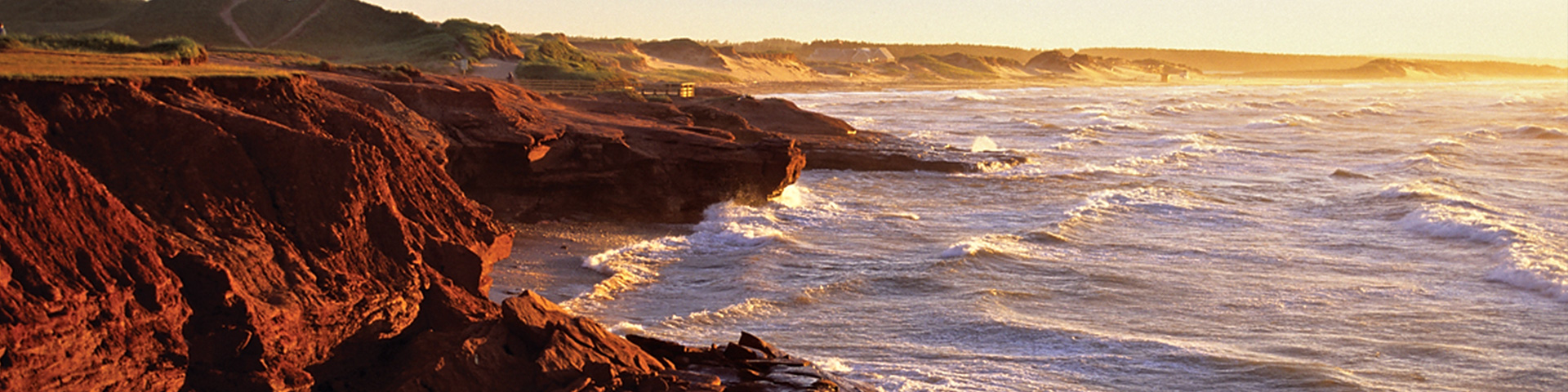
Sandstone cliffs in PEI National Park
Prince Edward Island National Park
Official cliff closure at Oceanview, PEI National Park
Respect and protect these fragile cliffs
Prince Edward Island’s sandstone coastline is both beautiful and dynamic. For over 8,000 years, rising sea levels and, more recently, stronger storms and reduced sea ice have been reshaping the shore. These natural forces can rapidly erode the cliffs (which has been accelerated by climate change), and even well-meaning human efforts to manage them can cause unexpected harm.
The red sandstone cliffs are an iconic feature of PEI’s landscape. They are unique, fragile, and off-limits…for very good reasons!
Here's why:
These cliffs are someone’s home!
They provide critical habitat for many species, including bank swallows, a species listed as “threatened” since 2017 under Canada's Species at Risk Act. Bank swallows nest in cavities along sandstone cliffs, and can sometimes be seen darting out acrobatically to catch insects for themselves and their young. Loss of their breeding and foraging habitats due to land use changes present a significant threat to this little bird. These cliffs are crucial to the bank swallow’s recovery.
Red foxes, bald eagles, kingfishers, and other seabirds also use these cliffs as habitat.
Sandstone cliffs are dangerous, even low ones.
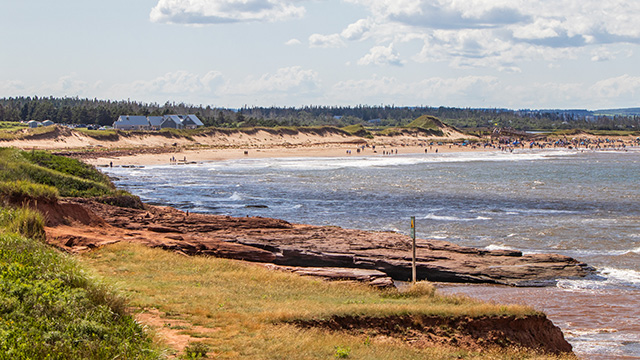 Oceanview
Sandstone cliffs are unstable and unpredictable, posing a risk to your safety. Cliffs may be ‘undercut,’ meaning that an area that appears safe from above, may in fact give way unexpectedly underfoot. Sandstone is ‘crumbly’ and unstable as compared to other types of stone. They also contain glacial till, which is even more fragile than the sandstone. Cliff edges can be slippery when wet or under some types of footwear.
You may have approached the edges of cliffs in locations outside of PEI that are composed of a more ‘solid’ rock – this is not safe behavior around cliffs composed of sandstone and glacial till.
These cliffs hold fossils and other artifacts that could be accidentally destroyed.
The red sandstone cliffs of PEI preserve fossils from the Permian period (300–250 million years ago), when the island was part of the supercontinent Pangea. As Pangea split, the sandstone settled near the current Atlantic coast. Erosion reveals new fossil layers each year, including giant ferns and Dimetrodon remains—predators that lived 60 million years before dinosaurs. Notable finds include a partial Dimetrodon skull and footprints. All fossils are protected within PEI National Park, which is on unceded Mi’kmaq territory.
Additionally, there have been culturally significant archaeological finds in and around these shores. These important clues to our history and pre-history are protected in PEI National Park. Should you come across an item anywhere in the park that you think could be a significant artifact, please leave it where you found it and report it to Parks Canada right away. If you can take a photo and/or GPS coordinates, please do so.
Closure of cliff areas at Oceanview, PEI National Park
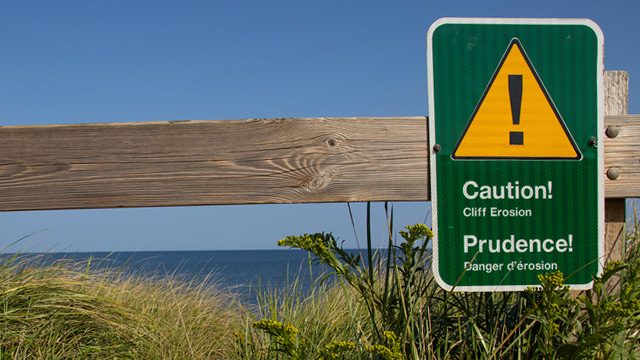 Caution! Cliff erosion.
Specifically, at Oceanview, fences, ropes, signage and other deterrents are being disregarded, and visitors are venturing out towards the cliff-edges, which are hazardous due to the nature of sandstone cliffs. The rocks in this area are also off-limits. Additionally, this area may contain poison ivy, as indicated by signage.
For all of these reasons, as of July 2025, Parks Canada is implementing a Field Unit Superintendent’s closure at Oceanview (46.49951N 63.38272W), encompassing all unmown areas beyond signage or fencing.
Trespassing beyond signage and/or over the fence is a violation under section 7(4) of the National Parks General Regulations. The minimum fine is $150.
Capturing the perfect selfie or photograph
The newly constructed Oceanview Lookoff at the east end of the parking lot is the ideal and safe place to take that selfie at Oceanview! Standing right at the cliff’s edge or scrambling down onto the rocks is not an option!
Other great locations for photos of red cliffs are:
- MacKenzies Brook
- MacNeills Brook
- North Rustico, lower parking lot. Step onto the beach, look to your left (West)
- Cavendish Beach Complex dune crossing. Step onto the beach and look to your right (East)
For more suggestions on photography within PEI National Park, please visit our photography webpage.
These safety and conservation principles apply to any sandstone cliffs across PEI National Park. Please tread carefully and respectfully—these landscapes are delicate, ever-changing, and deserve our protection.
- Date modified :