
Dogs and pets
Pacific Rim National Park Reserve
Wolves in the area: closures, dog prohibitions, and warning in effect
Long Beach Unit
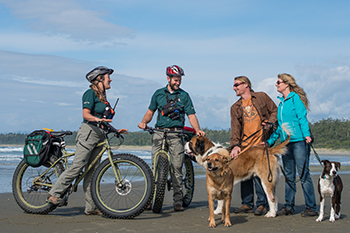
Pacific Rim National Park Reserve protects sensitive habitat for shorebirds, wolves, and other wildlife, and we all share responsibility for giving these animals the space they need. Dogs cause stress for wildlife and trigger aggressive behaviour, so please consider leaving pets at home. If you bring a dog, you are responsible for knowing and following restrictions.
General dog regulations in the Long Beach area
In areas where dogs are permitted (outside designated closures), they must be kept close and on a leash at all times, including on beaches, trails, parking lots, and in the water.
Failing to obey leash laws, area closures, or dog prohibition areas can result in charges under the Canada National Parks Act, with a maximum penalty of $25,000.
Approaching, following, or allowing your pet to chase or disturb wildlife is also illegal in Pacific Rim National Park Reserve.
Where dogs are not permitted
West Coast Trail Unit and Broken Group Islands Unit
Dogs are not permitted in the West Coast Trail Unit or the Broken Group Islands Unit at any time, unless they are certified service pets.
Closures, dog prohibitions, and wolf warning in effect within Long Beach Unit
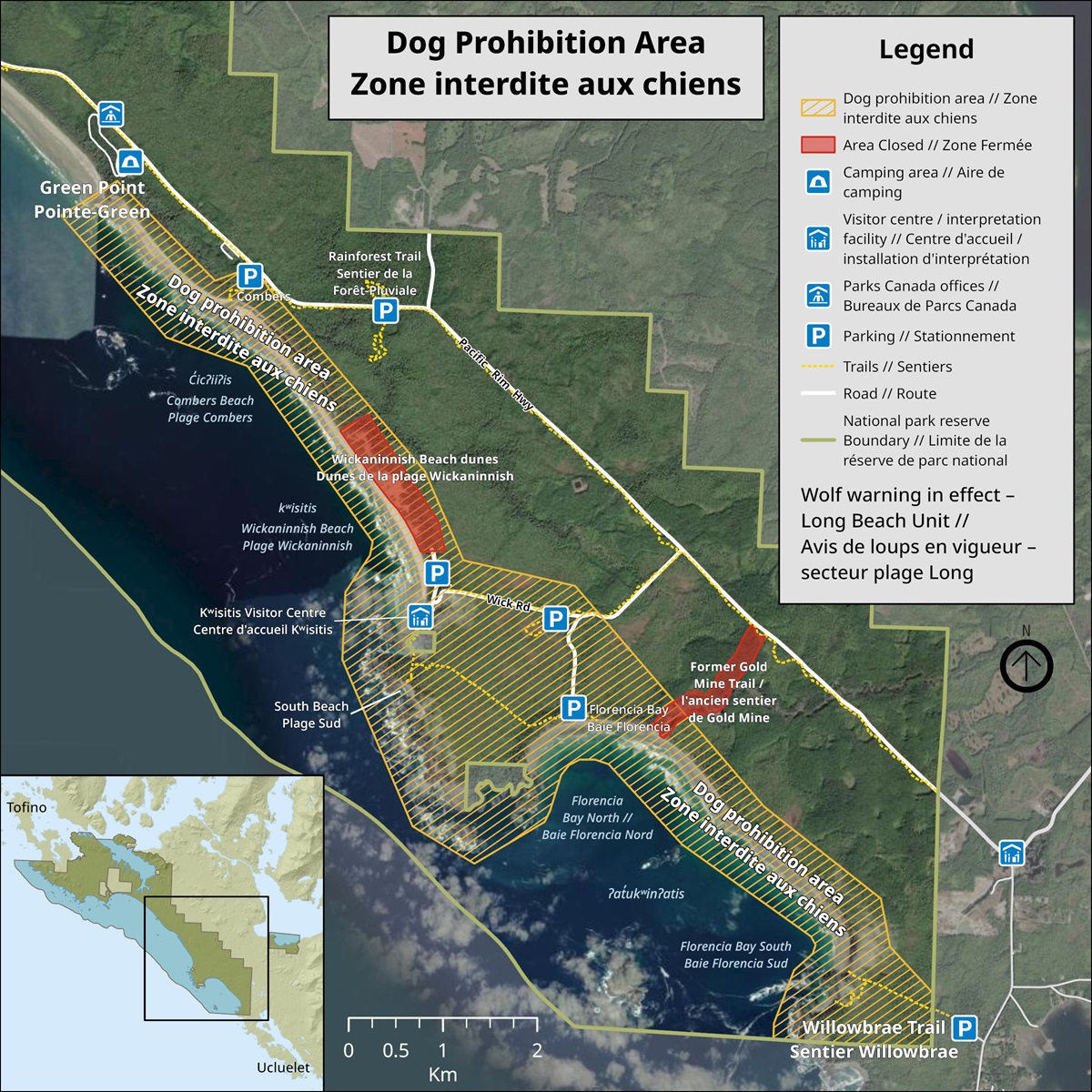
Description
Dogs are prohibited in coastal areas and trails between the Green Point Rocks and Willowbrae Trail (the southern boundary of the Long Beach Unit) until further notice.
This order builds on existing closures in the Wickaninnish Dunes and along the former Gold Mine Trail and complements the ongoing wolf warning in effect across the entire Long Beach Unit. Learn more about local wolves and coexistence efforts on the Wild About Wolves page.
Why is Parks Canada changing dog access in this area?
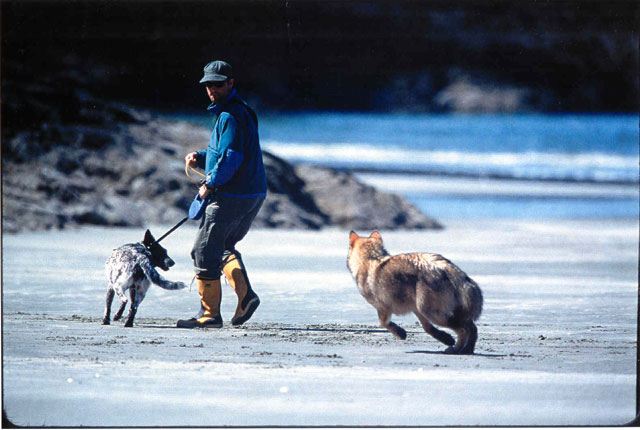
Human and wildlife safety is a top priority for Parks Canada. Since 2024, dog–wolf encounters have increased, creating risks for wolves, pets, and people. Multiple incidents have been reported where wolves closely approached or pursued dogs and showed unusually bold behaviour, including a serious dog–wolf incident resulting in the loss of a dog in the region. Because wolves often see dogs as competitors or prey, these encounters can escalate quickly.
To reduce risk, Parks Canada is phasing in management actions, including prohibiting dogs in an area where incidents are concentrated. Under the current wolf warning, visitors and residents are strongly encouraged to leave dogs at home. Where dogs are permitted, they must be kept close and on a leash at all times.
This section of Wickaninnish Beach is targeted because wolf activity, dog use, and human presence frequently overlap, creating a higher risk zone. GPS data from the Wild About Wolves project shows that wolves travel widely—often far beyond the 77 km² Long Beach Unit—meaning encounters can occur anywhere in the region. Parks Canada continues to monitor the situation and may adjust or expand restrictions with little notice if risks increase.
Are wolves new to the area?
No. Wolves have long lived here, and First Nations have coexisted with them for thousands of years. What is new is the confirmed increase in wolves in the Long Beach Unit.
Your cooperation with these restrictions is especially important to prevent wolves from becoming habituated to people or dogs—behaviours that can put wolves, pets, and people at risk.
Wolves play an essential ecological role as apex predators, and protecting them helps maintain a healthy, balanced ecosystem.
Learn more on our Wild About Wolves page.
What is Parks Canada doing to reduce risk?
Parks Canada is taking phased-in proactive steps to reduce risk and keep wolves wild:
- Prohibiting dogs between the Green Point Rocks and Willowbrae Trail (the southern boundary of the Long Beach Unit) until further notice.
- Maintaining area closures in the Wickaninnish Dunes and along the former Gold Mine Trail to give the wolves undisturbed space.
- Continuing a Long Beach Unit-wide wolf warning and a restricted activity order (RAO) preventing the willful approach of wolves, cougars, or bears within 100 m.
- Working collaboratively with First Nations through Cooperative Management Boards and field staff to protect ecological and cultural values.
- Monitoring wolf activity with remote cameras and tracking.
- Increasing patrols, visitor education, and compliance support.
- Using noise makers to reinforce safe boundaries and discourage wolf habituation.
- Providing wolf safety and coexistence information online and through the Parks Canada camping reservation system.
How was the decision made?
The decision is based on monitoring data, research, and observed interactions, and was made in collaboration with the Tla-o-qui-aht First Nation and Yuułuʔiłʔatḥ Government through Cooperative Management Boards. This approach supports Indigenous knowledge, perspectives, and long standing cultural connections to wolves.
Can visitors see the wolves?
Wolves are monitored using remote cameras, but visitors should never try to watch, follow, or approach them—even from afar. Repeated exposure can lead to habituation or food conditioning, increasing the risk of conflict, which can result in wolves being destroyed. Coexistence means giving wildlife space and sharing the landscape respectfully.
Approaching, following, or disturbing wildlife is illegal under the Canada National Parks Act (maximum penalty $25,000). For safety guidance, visit the Living with Wildlife page.
Sharing this space: Leashing your dog matters
Keeping your dog on leash helps protect the wildlife and visitors who share Pacific Rim National Park Reserve. The beaches and trails are important habitat for migratory shorebirds, wolves, and other wildlife.
It also ensures all visitors, including those who may be uncomfortable around dogs, can enjoy their experience.
Your choices make a difference—please keep your dog on leash and follow all dog related restrictions.
Dogs impact shorebirds
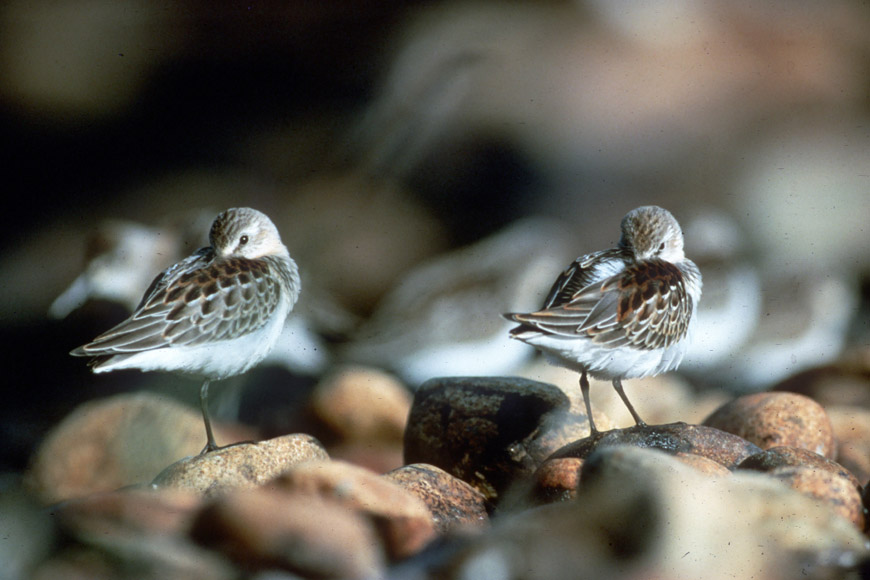
Pacific Rim National Park Reserve protects an important junction on the Pacific Flyway, a coastal migratory route used by millions of shorebirds each year. More than 500,000 birds from over thirty species land on Long Beach twice annually to rest and feed. These birds need safe space to rebuild their energy, but dogs off leash may chase or flush them, forcing birds to waste the reserves they need for their journey. Similar disturbance happens when visitors walk, cycle, or run through flocks.
To reduce disturbing shorebirds, every year between April 1 and October 1, dogs are not permitted between Sandhill Creek and Green Point Rocks, including Combers Beach, Combers Beach Trail, and the boardwalk from Green Point Campground.
By keeping your dog on leash, following the seasonal Combers Beach closure, and staying at least 25 metres (five car lengths) from shorebirds, you help prevent unnecessary stress and support their survival.
Dogs off leash video
While national parks are for everyone to enjoy, keeping your dog on-leash is integral to protecting the well-being of migratory shorebirds. If your dog disturbs them, they might abandon their feeding and be too weak to reproduce by the time they reach breeding grounds in Alaska.
Transcript
The relationship between dogs and humans dates back centuries. First domesticated for the purposes of work, dogs have since become beloved companions and vital members of our families.
And while it is true that dogs may indeed be human’s best friend, a dog off leash on any of Parks Canada’s beaches is a shorebird’s...WORST ENEMY.
Okay, that might be a bit over-dramatic. The fact is, is that Parks Canada’s beautiful beaches represent a vitally important feeding, and resting habitat for long-travelling migratory shorebirds.
And our canine friends – though well-intentioned and having fun - can do a lot, off-leash to prevent these birds from feeding.
Think of it from the bird’s perspective: For them, it is like every single day, you wake up and run a marathon Once you’ve finished, you’re tired and hungry, settling in to eat, in order to give you the necessary fuel for the next day’s journey. But just then, someone comes in and starts BARKING IN YOUR FACE, chasing you away from your peaceful, well-deserved meal.
This continues, and eventually, you give up, you don’t eat, you don’t rest. And the next day’s marathon still looms. But now, exhausted, and starving you might not have the energy to complete your journey.
So. Please. Next time you’re on one of Parks Canada’s beaches, think of the shorebirds - the hungry, little marathoners of the Pacific Northwest and...leash up your dog.
www.parkscanada.gc.ca/gulf www.parkscanada.gc.ca/pacrim
Dogs impact wildlife
There are other animals that live in the national park reserve, such as bears, cougars and smaller creatures like pine martens, river otters and birds. They all need space and consideration. Keeping dogs on leash at all times is the best way to prevent pets from disturbing and possibly aggravating the animals that make Pacific Rim National Park Reserve their home.Dogs impact other visitors
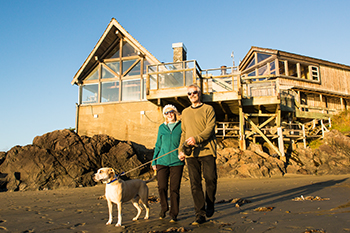
Some visitors may have apprehensions around dogs. Having your dog on a leash ensures they do not approach other visitors without invitation. On-leash pets and can also experience stress when they encounter a dog that is off leash.
Keeping your dog on leash shows you care about the health of the national park reserve and respect other visitors.
- Date modified :